In short
Around 70% of the heat an outdoor pool loses leaves through the water surface, most of it as evaporation. A cover on the surface stops most of that loss, which is why the US Department of Energy describes covers as the single most effective way to cut pool heating costs. Reductions of up to 70% are cited.
- Evaporation is the largest loss, not conduction through the pool walls.
- A cover works by contact with the surface, so it does not need to insulate to save heat.
- Savings depend on climate, water temperature, wind exposure and hours covered.
Every litre of water that evaporates takes its latent heat with it. Warm water in cool air evaporates quickly, and wind across an uncovered surface accelerates it further.
Why evaporation dominates
Conduction through the pool structure is comparatively small. Insulating the walls of a pool that is losing heat from its surface addresses the minor loss and leaves the major one untouched.
What a cover changes
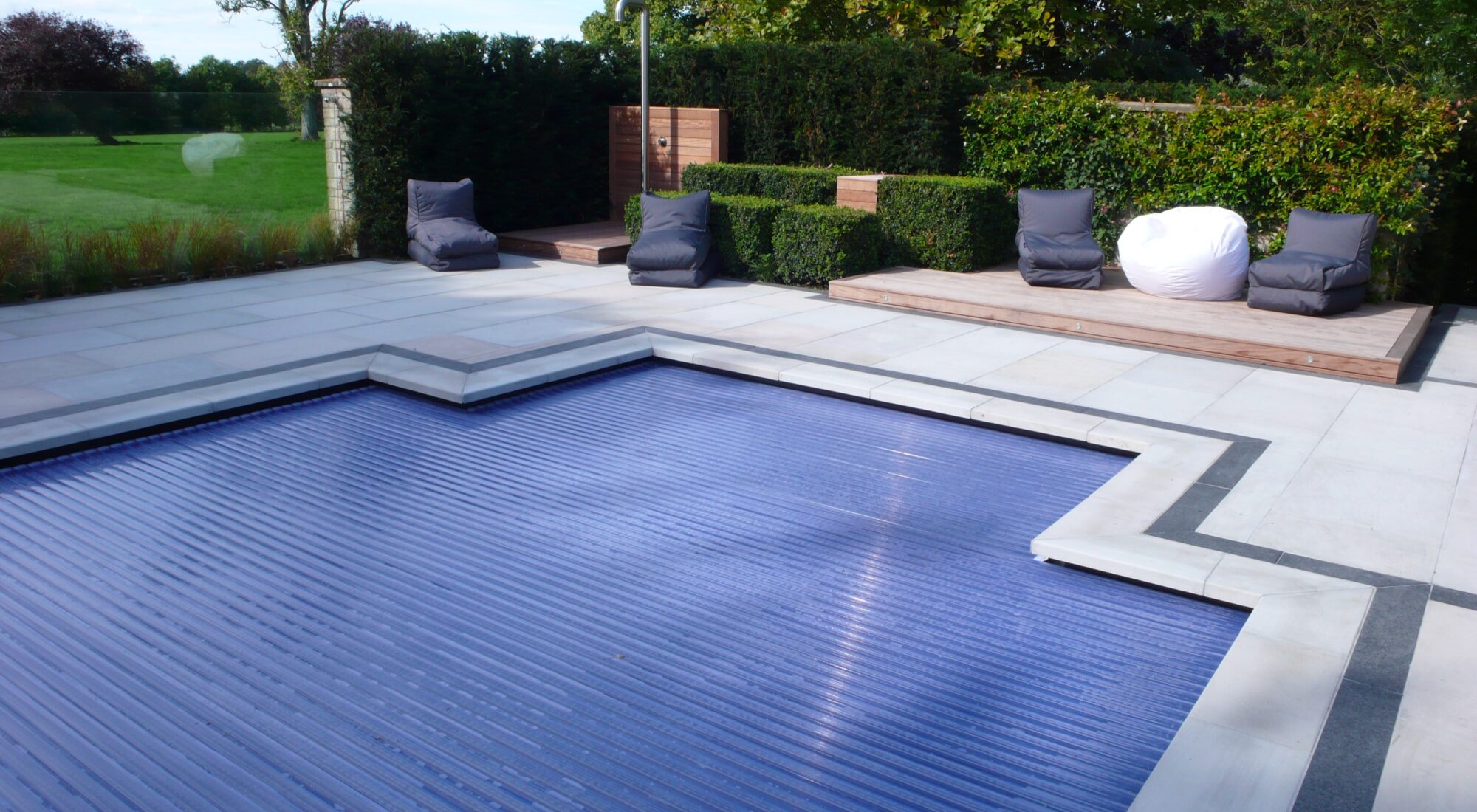
A cover in contact with the water removes the air–water interface. Evaporation effectively stops while the cover is closed.
Hours covered is the variable that matters
A cover saves heat only when it is closed. A manual cover that takes two people ten minutes gets closed some nights; an automatic cover on a key switch gets closed every night.
Checking the numbers for your pool
Four inputs decide the estimate: surface area, water temperature, heating type and hours covered.
| INPUT | TYPICAL UK VALUE | EFFECT ON LOSS |
|---|---|---|
| Surface area | 32 m2 for an 8 × 4 m pool | Linear |
| Hours covered | Whenever the pool is not in use | Decisive |
A cover saves heat only when it is closed.
PoolLock UK
Next step
Put your own pool dimensions in and see the estimate, with the assumptions shown.
Questions people ask
How much can a pool cover save on heating?
The US Department of Energy attributes reductions of up to 70% in pool heating energy to covers. The figure depends on climate, water temperature, wind exposure and how many hours a day the cover is closed.
Does a cover need to be insulated to save heat?
No. Most of the saving comes from stopping evaporation at the water surface. Insulated slats and thermal canvas add a smaller further saving by slowing conduction and radiation.
Does a cover replace supervision?
No. A closed cover forms a solid barrier over the water surface, but supervision of children around water remains necessary.