In short
There is no statutory requirement for domestic pool fencing in the UK, but builders and homeowners face significant legal exposure under the Occupiers' Liability Acts. Installing a certified, key-operated automated safety cover satisfies the duty of care by providing a physical barrier against accidental immersion while maintaining architectural beauty.
- The Occupiers' Liability Acts of 1957 and 1984 enforce a strict duty of care on property owners.
- Swimming pools are legally recognized as potential allurements to young children.
- Solid safety covers provide an engineered physical barrier aligned with SPATA standards.
The legal landscape: understanding occupiers’ liability in the UK
When designing and constructing private domestic swimming pools across the UK, contractors are frequently asked by clients whether perimeter fencing is legally compulsory. Unlike France, where pool barriers are legally mandated by Law No. 2003-9, the UK has no statute requiring fences around private domestic pools.
However, relying on the absence of a specific pool fencing law is a major legal risk. The Occupiers’ Liability Acts of 1957 (for lawful visitors) and 1984 (for uninvited visitors and trespassers) dictate that property owners have an affirmative duty of care to ensure persons on their property are reasonably protected from injury.
The SPATA layered safety framework
In UK jurisprudence, bodies of open water are classified as classic “allurements” to young children, who cannot be expected to recognize the danger of drowning. Consequently, courts and insurance loss adjusters expect pool owners to have taken reasonable, foreseeable protective measures.
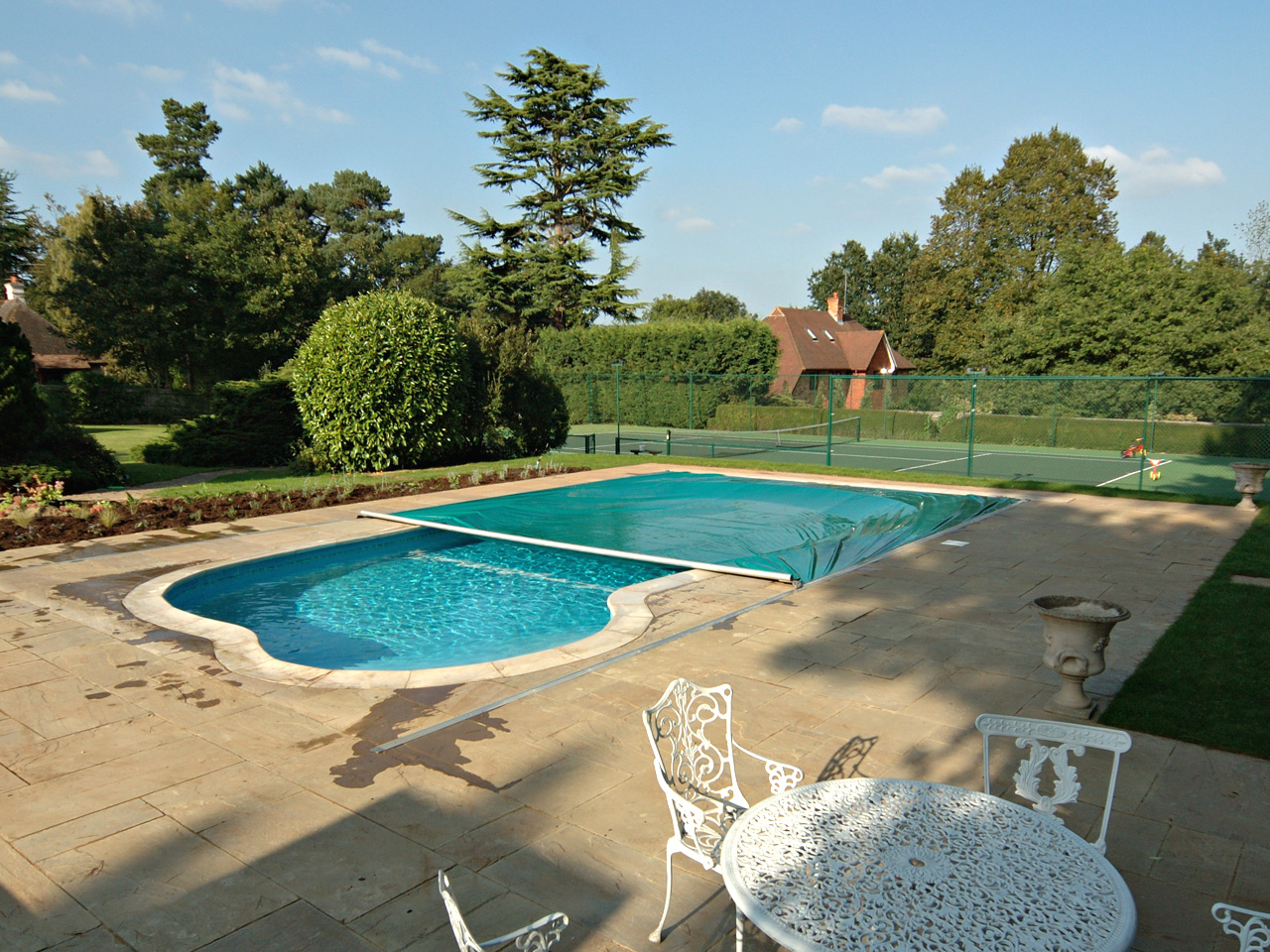
SPATA (The Swimming Pool and Allied Trades Association) recommends a layered safety approach. Because homeowners frequently reject unsightly fences that disrupt garden sightlines, an automated solid safety cover represents the premier specification: it provides an impenetrable, walkable surface barrier when closed, locking out risk completely.
Benefits of specifying safety covers for clients
Consultative Authority: Educating homeowners on occupiers’ liability positions your building practice as professional, knowledgeable, and safety-conscious.
Aesthetic Integration: Eliminates the need for disruptive wire or glass barriers, preserving the architectural integrity of high-end landscape designs.
SPATA and European Standard Alignment: Fully compliant with rigorous European safety testing (including NF P90-308 load parameters).
Next step
Download full technical specifications and safety compliance data for architectural submittals.
Download the specificationQuestions people ask
What is the legal standard for domestic pool safety in England and Wales?
The standard is defined by common law and the Occupiers' Liability Acts 1957 and 1984, which require reasonable precautions to prevent foreseeable harm to visitors and children.
Does installing an automatic safety cover satisfy home insurance requirements?
In most cases, insurers recognize certified solid safety covers as effective physical risk mitigations. Clients should confirm specific policy terms with their underwriter.
How does a safety cover differ from standard slatted pool covers under safety guidelines?
A solid safety cover is anchored into tracks and certified to hold adult weight (200 kg/m²), whereas slatted covers float and are not certified walkable barriers.