In short
Up to 90% of heat loss in an outdoor UK swimming pool occurs at the water surface via evaporation. A solid automated pool cover forms an airtight barrier that halts surface evaporation completely, reducing seasonal heating energy requirements by up to 70%.
- Evaporation at the water surface accounts for up to 90% of total pool heat loss.
- A tensioned solid cover creates an airtight vapor barrier over the pool water.
- Stopping evaporation slashes seasonal heating energy demand by up to 70%.
The hidden culprit behind high pool heating bills
Heating an outdoor swimming pool in the UK is one of the most significant ongoing running expenses for any property owner. Whether your system relies on a modern Air Source Heat Pump or a traditional gas boiler, the energy required to maintain comfortable swimming temperatures (typically 28°C to 30°C) is immense.
However, the real driver of high energy bills is not the heating equipment itself. It is evaporation. Up to 90 percent of a swimming pool’s heat energy is lost directly at the water-air interface. As wind sweeps across an uncovered surface, water molecules evaporate rapidly, stripping huge quantities of latent heat out of the pool.
Lock in the warmth: how a solid cover transforms thermal efficiency
Standard floating bubble covers offer minimal structural protection and degrade quickly under UV radiation. Upgrading to an engineered solid safety cover delivers an immediate transformation in thermal efficiency.
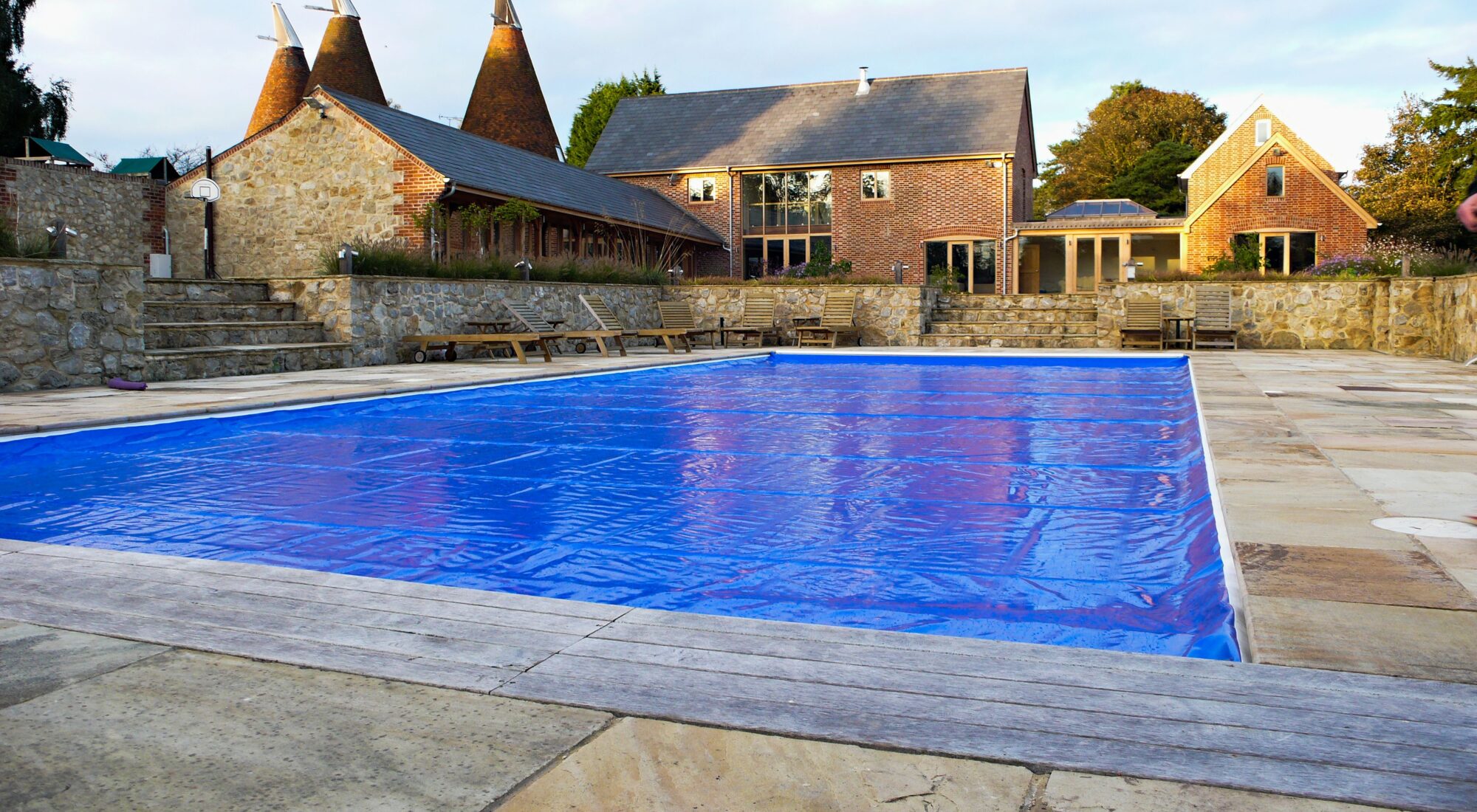
When a PoolLock solid cover closes, heavy-duty reinforced vinyl is tensioned into rigid perimeter tracks, creating a total airtight seal across the pool surface. This eliminates evaporation entirely while closed, retaining heat overnight and preventing rapid temperature drops caused by cold UK winds.
Three pillars of thermal preservation
Total Thermal Seal: The tensioned solid fabric prevents moist, heated vapor from escaping into the atmosphere.
Passive Solar Absorption: High-grade cover materials absorb incident solar radiation during sunny spells, conducting free ambient heat directly into the water body.
Wind and Chill Shield: By isolating the water surface from freezing night breezes, convective cooling is dramatically minimized.
Next step
Calculate the heating savings and heat retention figures for your pool dimensions.
Estimate your savingsQuestions people ask
How much energy can a solid pool cover save in the UK?
According to data from the US Department of Energy and European pool thermal studies, an airtight solid cover can reduce pool heating energy consumption by up to 70% by eliminating evaporation.
Does an automatic cover retain heat better than a manual bubble sheet?
Yes. Bubble sheets float loosely and leave exposed edges where heat escapes, whereas an automatic solid cover is locked into anodised perimeter tracks to form a completely sealed barrier.
How quickly does an uncovered pool lose its heat overnight?
An uncovered pool in typical UK autumn or spring weather can lose 3°C to 5°C of water temperature overnight due to wind-driven surface evaporation, requiring hours of costly re-heating the next morning.